The Night
A high speed stream of solar wind arrived at Earth during the day. Bz had been down to -10 nT during the day, and the wind speeds came up to 600-700 km/s. As evening approached, Bz became a lot more modest and was now just barely below zero. GOES magnetometer readings showed the atmospheric conditions were still disturbed, so I thought it would be a good night to find auroras.
The sky conditions were mostly clear, but the moon was still up in the evening. It was a waxing crescent moon, approaching the first quarter. It would provide some nice foreground illumination before setting, and then I'd be able to focus more on the auroras. I decided, since the auroras would be low on the horizon, that Lake Winnigigoshish would be a good place to go.
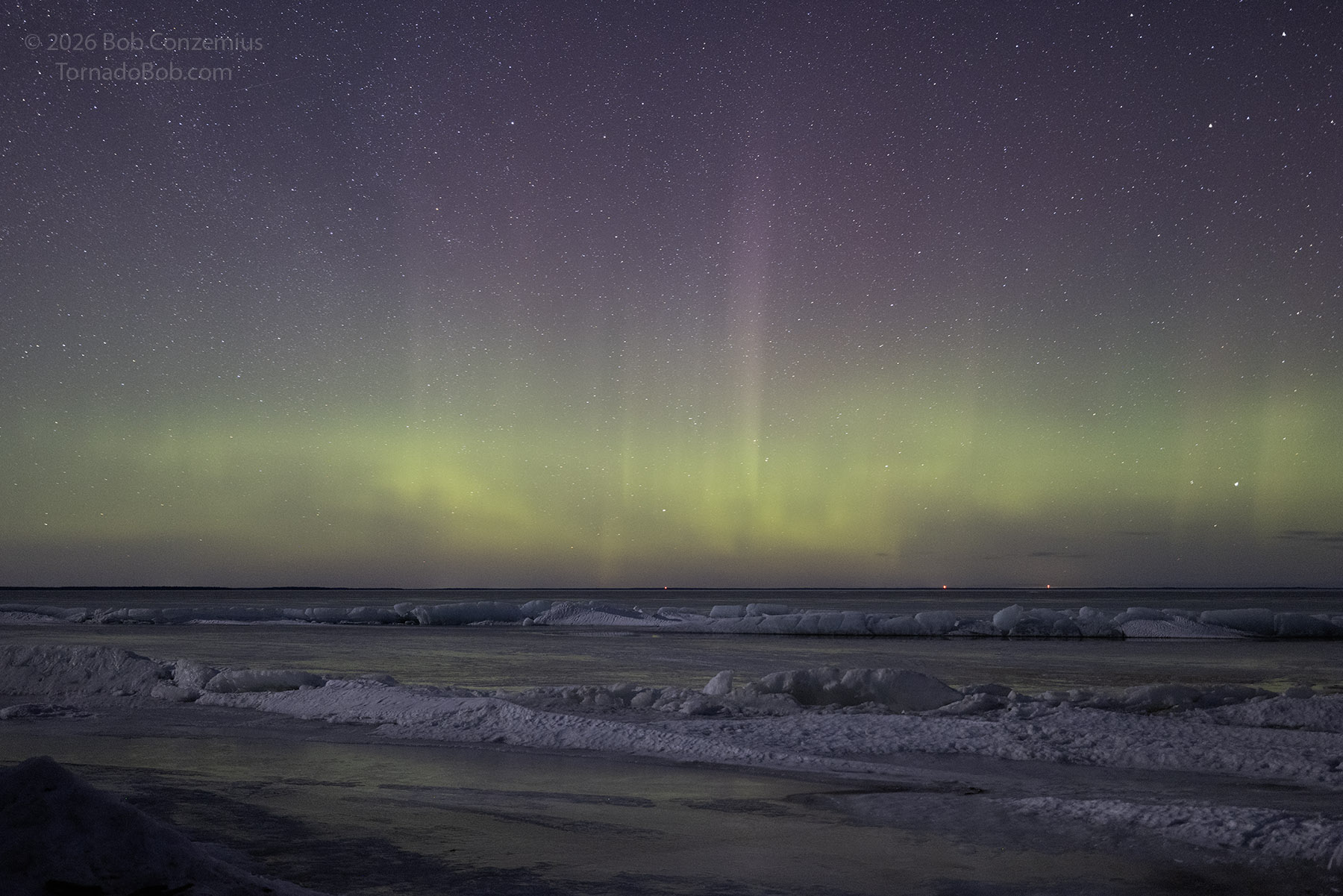
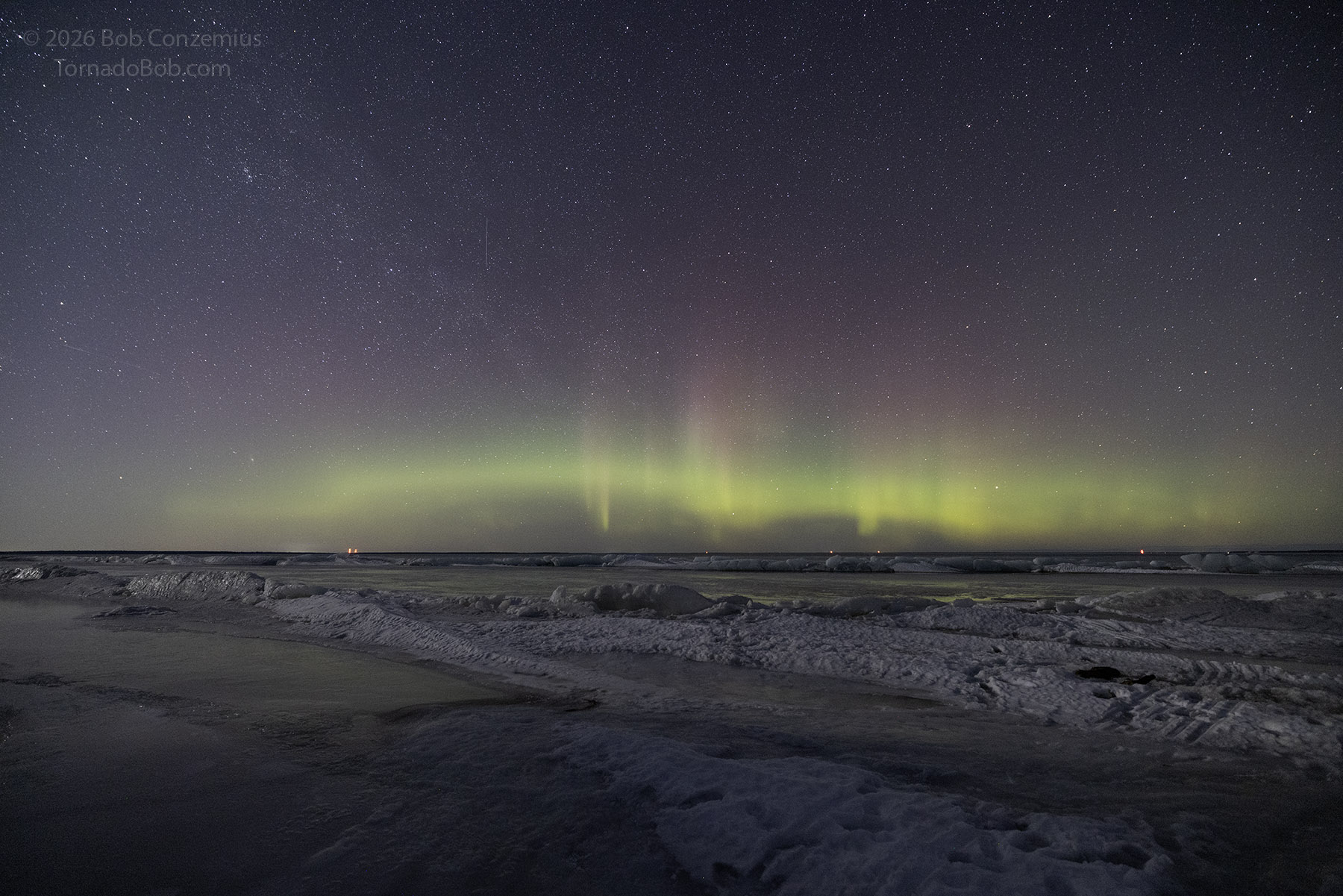
The Arc Reforms
After this initial, mild substorm, the arc was mostly gone, but over the next 45 minutes, it gradually returned. This time, it developed into a double arc. Double arcs are quite often followed by a dramatic substorm, so I was reconsidering my plans to shoot only until 11:00 PM and then go home. Tomorrow was a work day (Monday), so I needed to be fresh in the morning. Howveer, I was becoming more interested in staying and pushing my sleep limits a bit. There could be some good photography ahead.
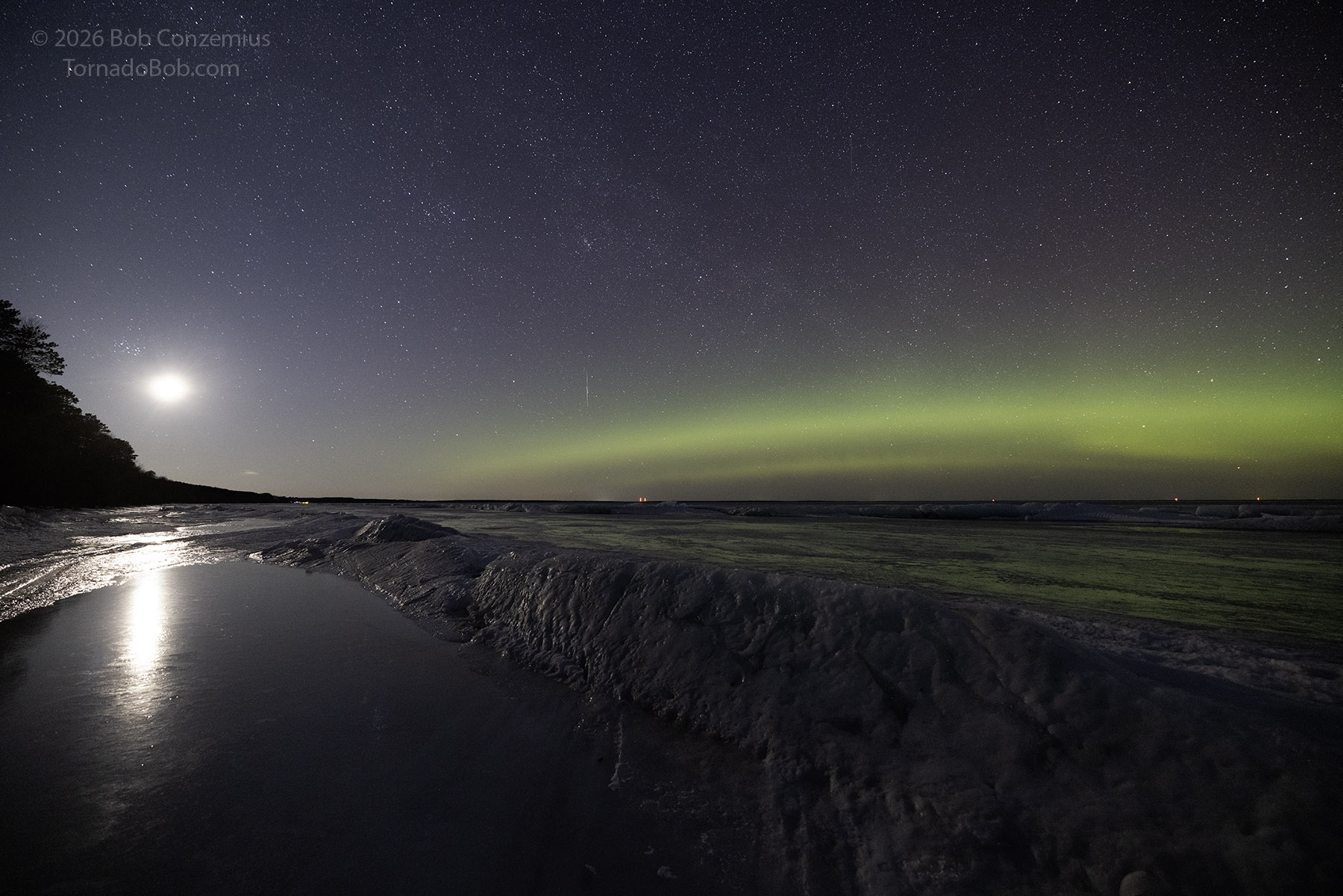
I usually don't know how long it will take before the next substorm starts. The oval can remain as a diffuse, simple arc for hours, but in most cases, it eventually breaks up. I was looking at taking a chancee. What's even better, a double arc usually is a good indication that the substorm will be a good one.
Finally, just after midnight, the lower arc started to break up and get brighter. It still didn't really break up into a dramatic show, and the upper arc remained in place, mostly unchanged. I framed a few shots with ice in the foreground and the setting moon in the background. These created some nice scenes.
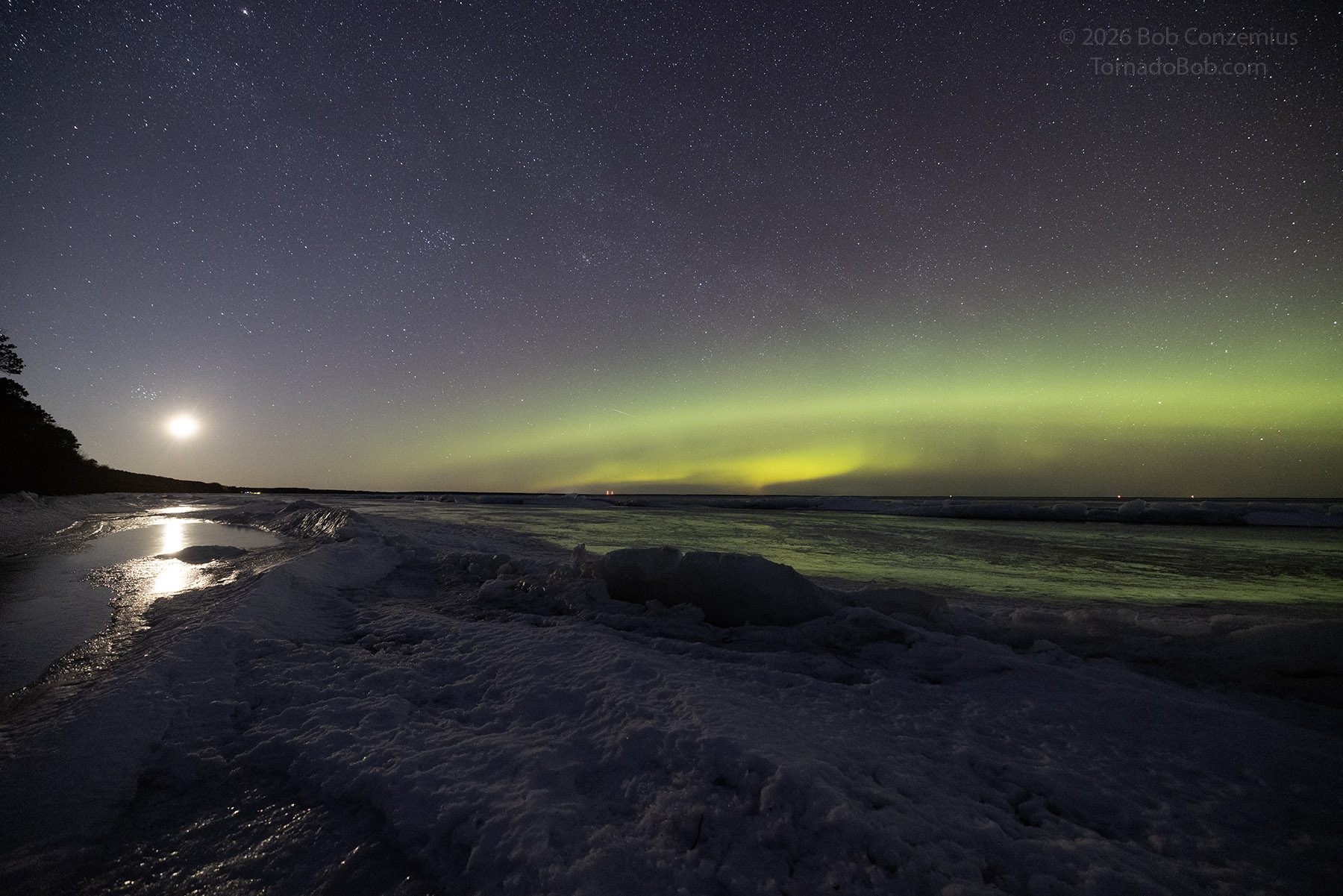
I thought I had a substorm, but the auroras didn't really break up into bright columns. This went on for the next half hour. The upper arc remained mostly as it was, and occasionally, the lower arc would show a little more brightness as well as some structure.
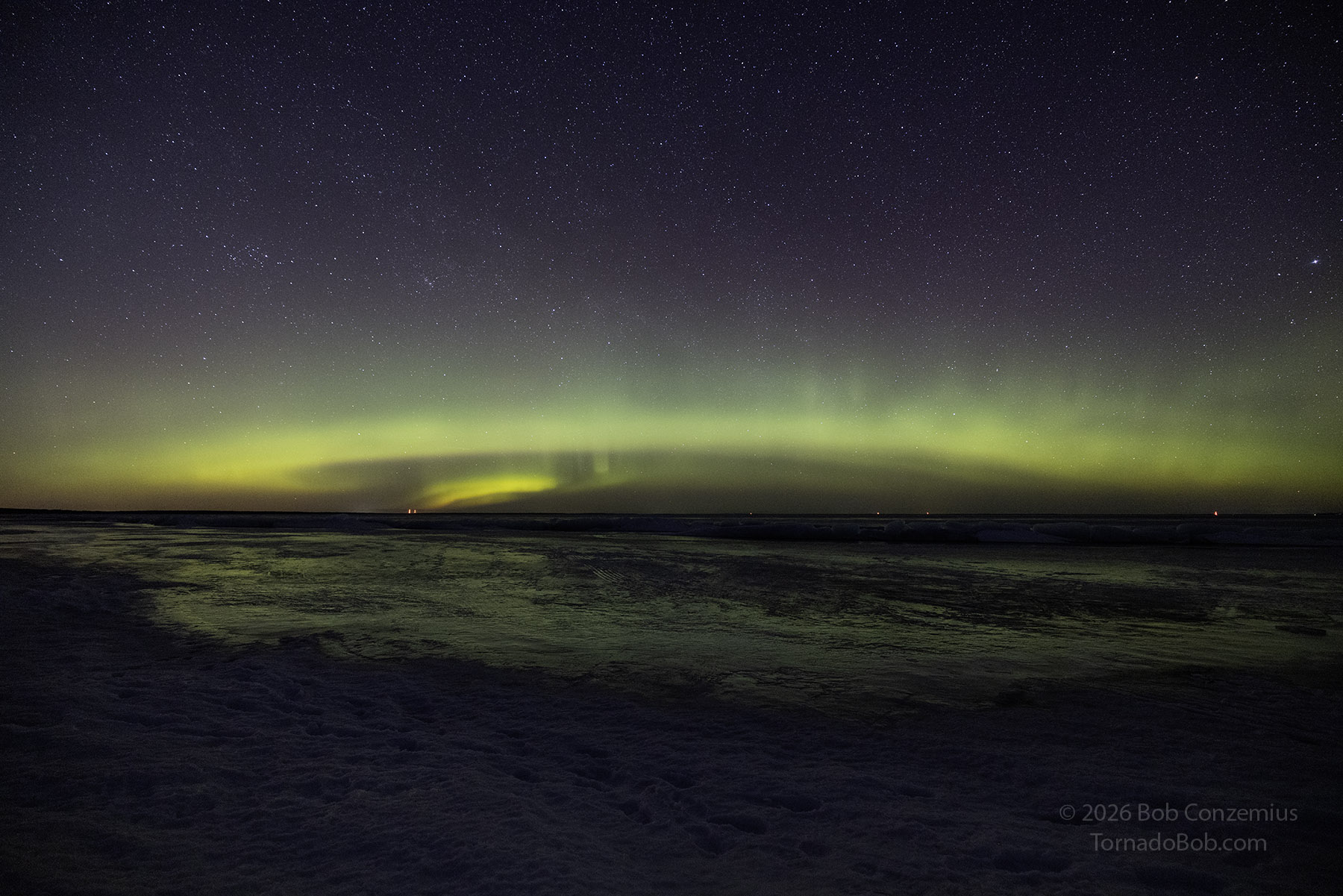
I continued to look for a substorm, but as time went on, the double arc became just a single arc with some small rays radiating from the top. It looked like it might be a while before the real substorm started. The moon was now below the horizon, so the foreground photography was not as interesting as it had been a half hour earlier.
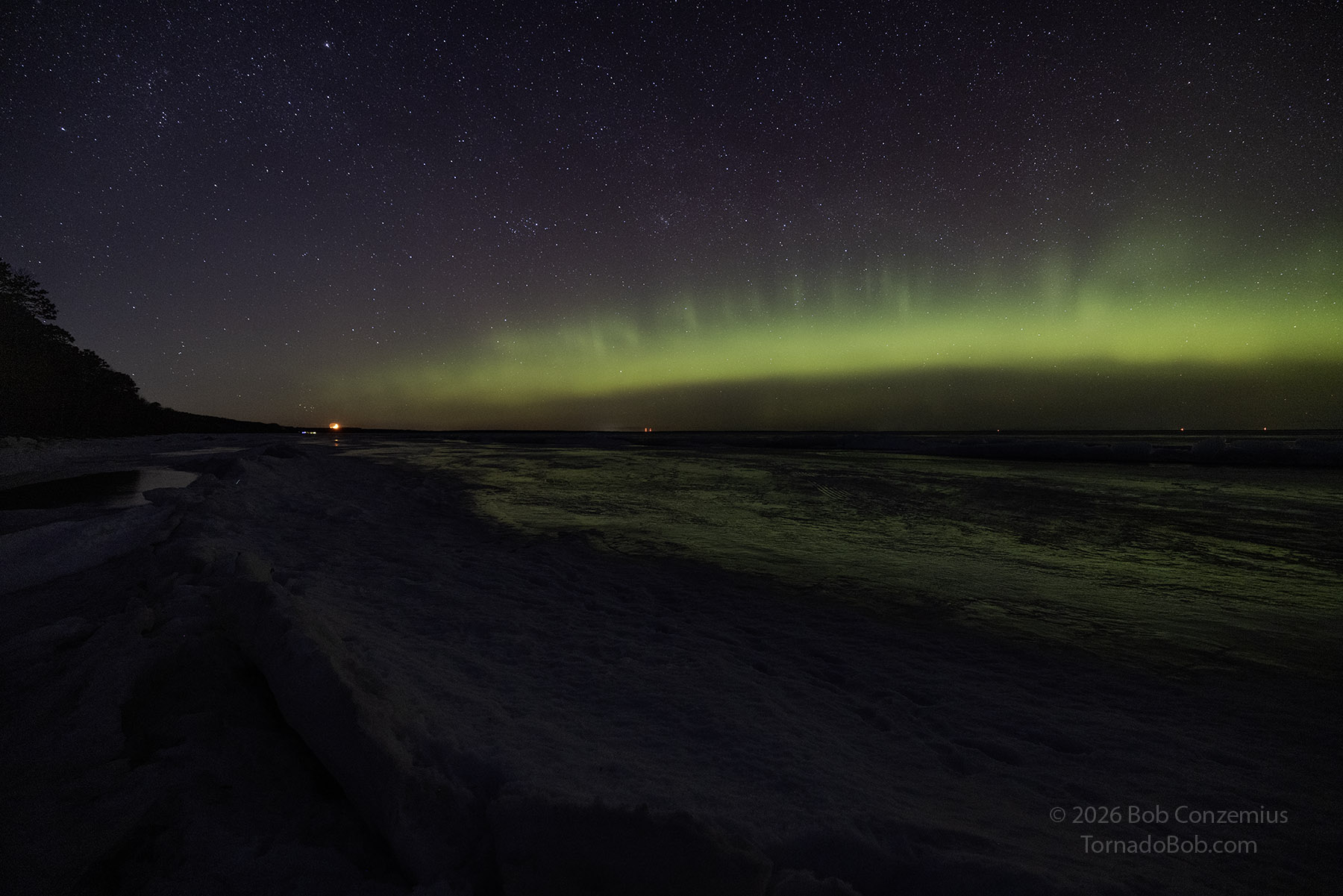
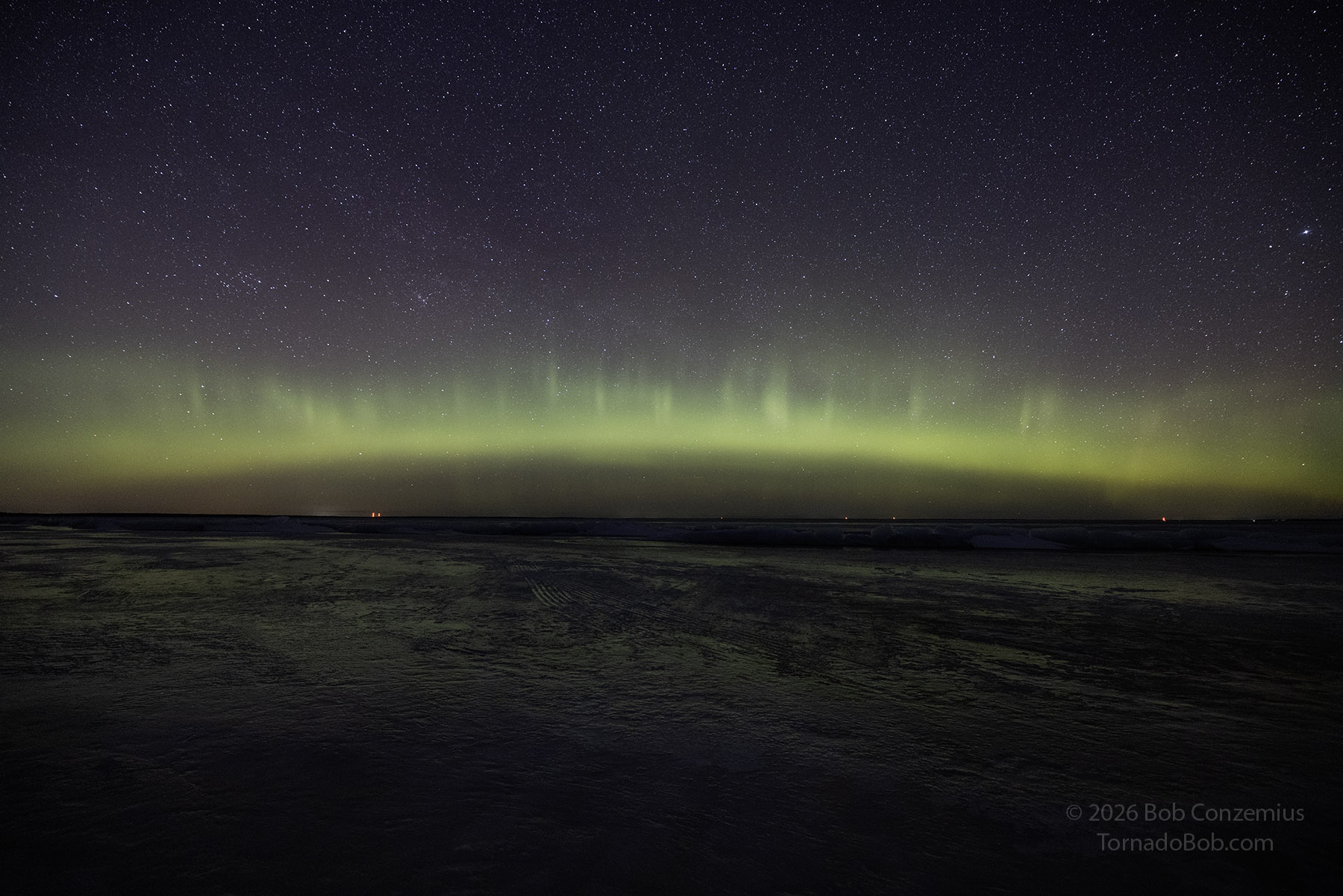
Sometime around this point, a group of three people drove up to the landing in their pickup. Lights were pointed right at the landing. They shut the lights off, got out, and started walking around and taking pictures on the ice. I said hello to them, but they weren't much into conversation. At that point, I decided it was a good time to leave. I wasn't getting the second substorm that I wanted, and I'd have to move to find a new spot, anyway. Off I went.
Wrap-up
Soon after I left, a substorm started. As I drove through Bena, I could see some structure over the tops of the trees, so I stopped at the resort in town and snapped a few pictures there, but it was nothing dramatic. Since I didn't process the images in the morning, I guess I didn't think they were worthwhile. It was likely not a very dramatic substorm. Anyway, after not seeing much more at Bena, I continued home, and that was all.