Corotating Interaction Region
A corotating interaction regions (CIR) ahead of a high speed stream of solar wind had the right timing to impact Earth during evening ours in Minnesota. Bt had increased to about 10 nT, and Bz was fluctuating between 0 and -10 nT. Speeds were increasing to over 600 km/s.
I had some cross-country ski trail grooming to do at Mt Itasca in preparation for a Minnesota Biathlon event this weekend. I headed out after work and some dinner, and as I arrived, the northern horizon was already glowing green. I needed to start grooming, but I had my camera with in case a good substorm happened.
First Substorm
The substorm happened pretty quickly. I had just gotten the grooming snowmobile going when I saw that the lights were brighter and spreading southward from the northern horizon. I ran back to my car and grabbed my camera, set up my tripod, and started shooting. There had been a snow tubing party that night, and parents were coming back into the parking lot to pick up their kids. This car activity briefly interrupted my shooting, but I was able to get a good shot in-between cars. It was necessary because this bright expansion phase doesn't last that long. Additionally, I was seeing some novel structures that I didn't think I had seen before, so I wanted to capture those.
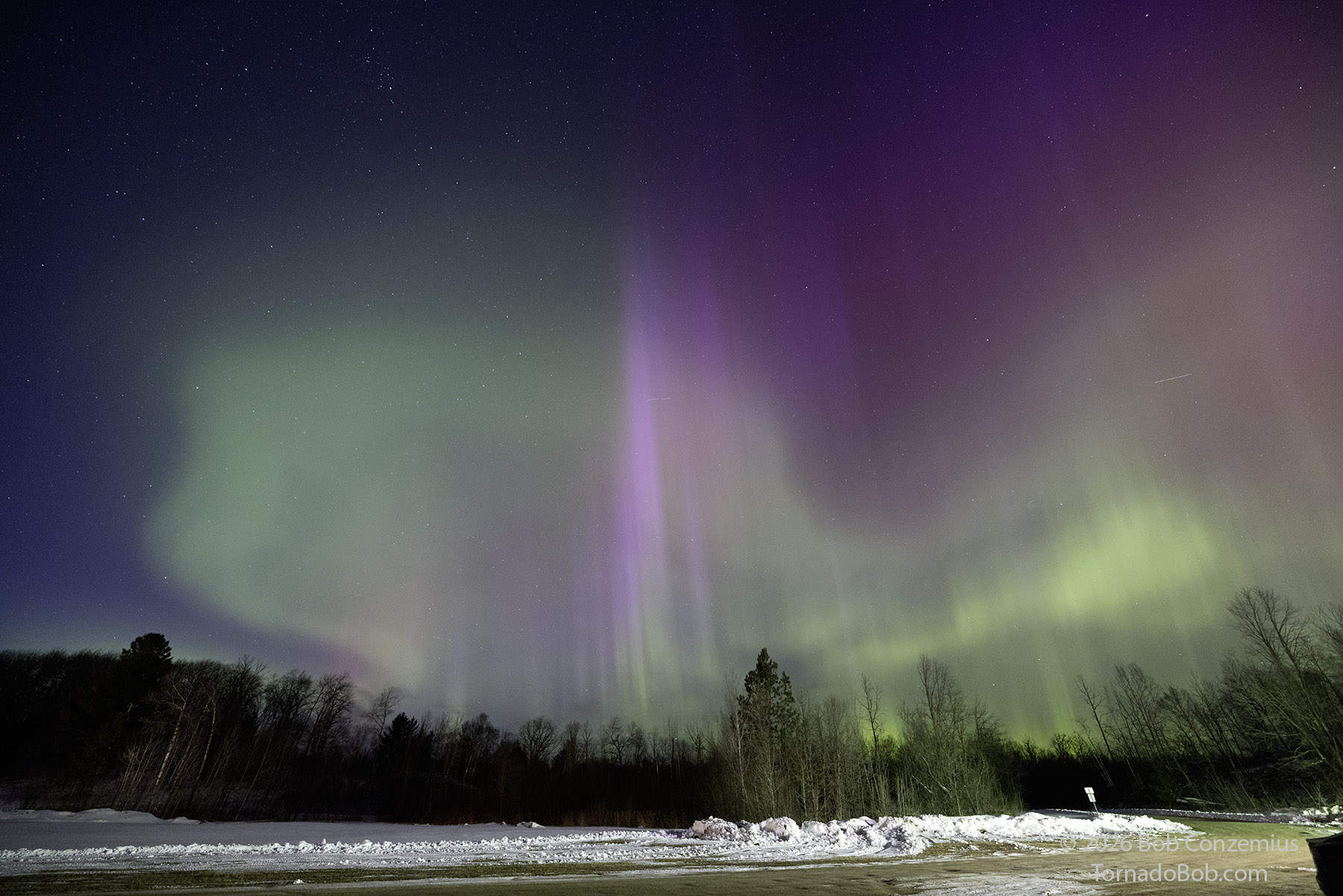
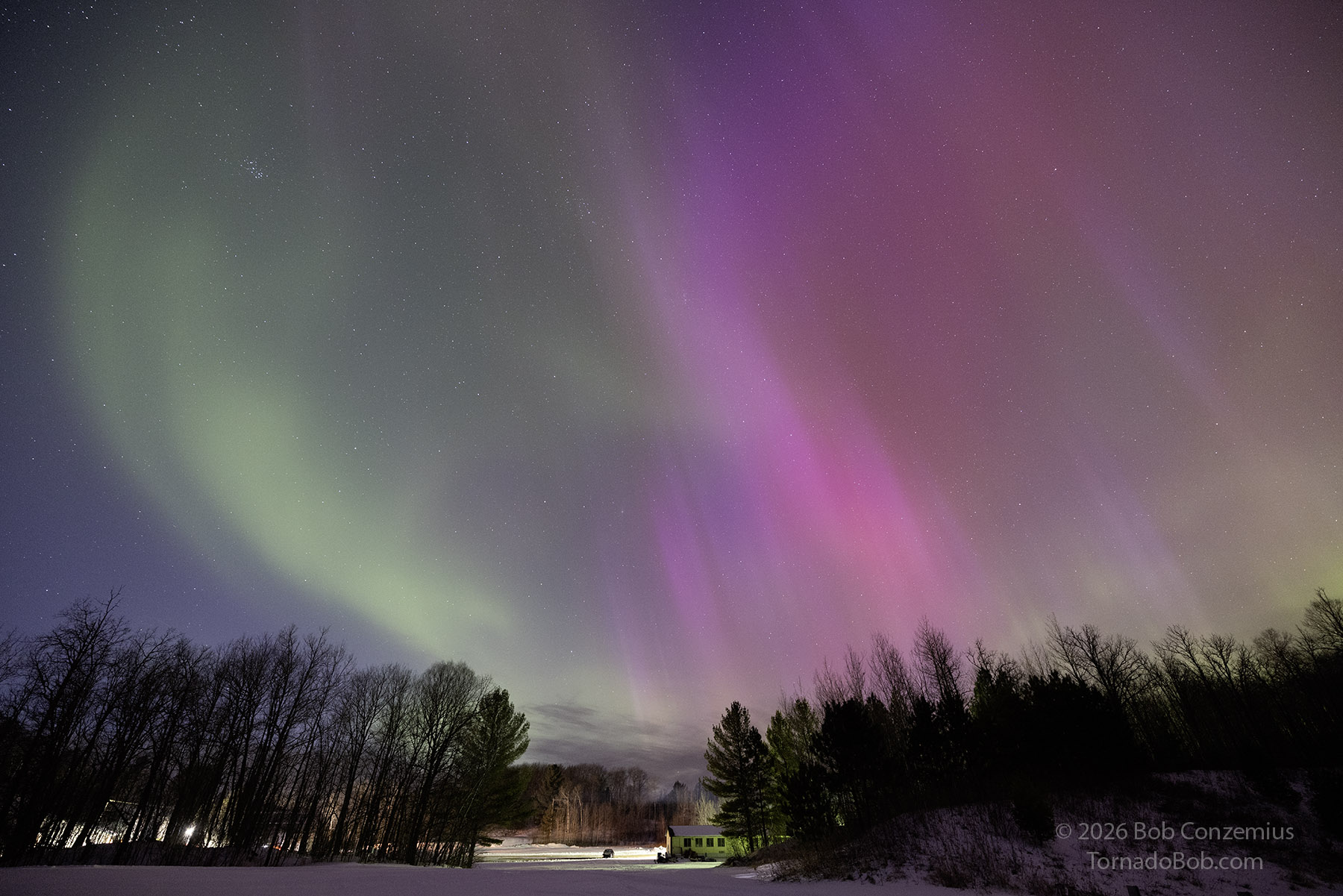
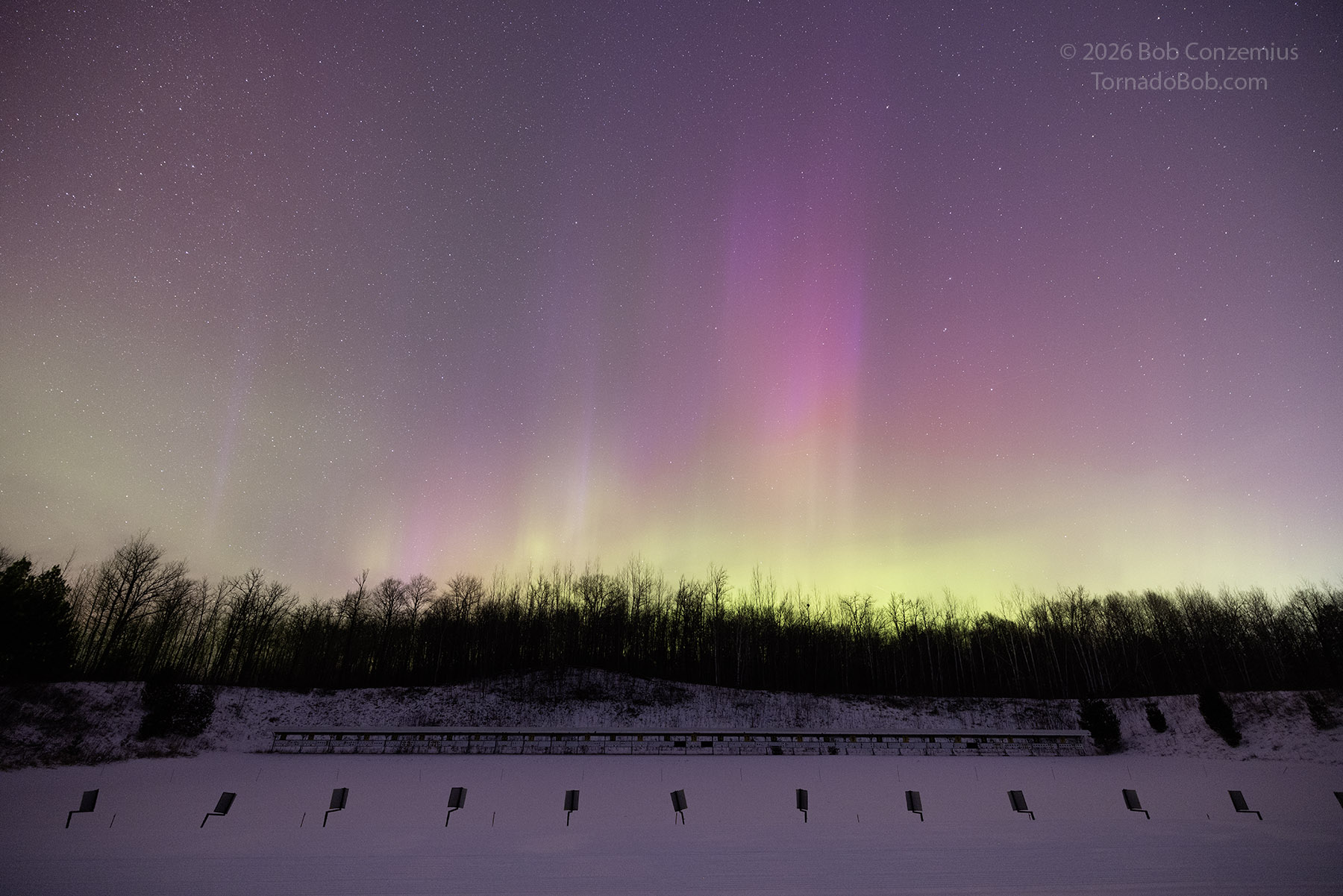
When a got a few good pictures of this initial expansion phase, I ran into the biathlon stadium to do some more focused photography. The auroras were continuing to spread into the southern sky, and those flat (horizontal) green structures were intriguing. These structures dissipated, leaving the more traditional vertical, multi-colored columns that are typically present in substorms. I turned my camera back north over the biathlon firing line and snapped a few pictures. During my frantic run around the biathlon stadium, I had bumped the focusing ring accidentally, so I had a few shots that were out of focus, but I eventually checked focus again (I have developed a habit of doing this more frequently, and this saved me tonight). The substorm faded, I put the camera back in the car, and I resumed my cross-country trail grooming.
It turns out that my grooming was not needed. Minnesota Biathlon postponed the event due to a snowstorm moving in, making travel from the Minneapolis-St. Paul area difficult.
Another Substorm
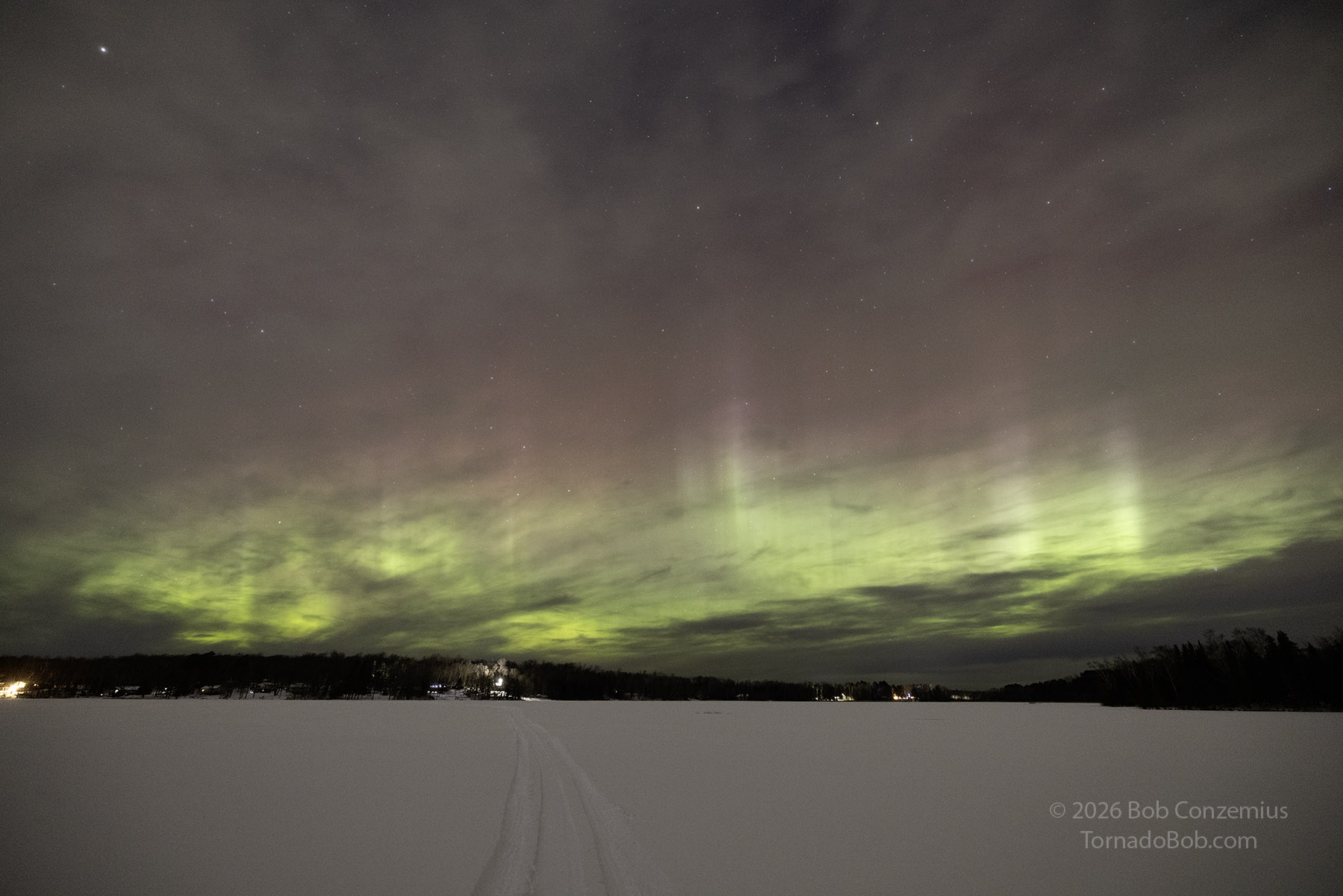
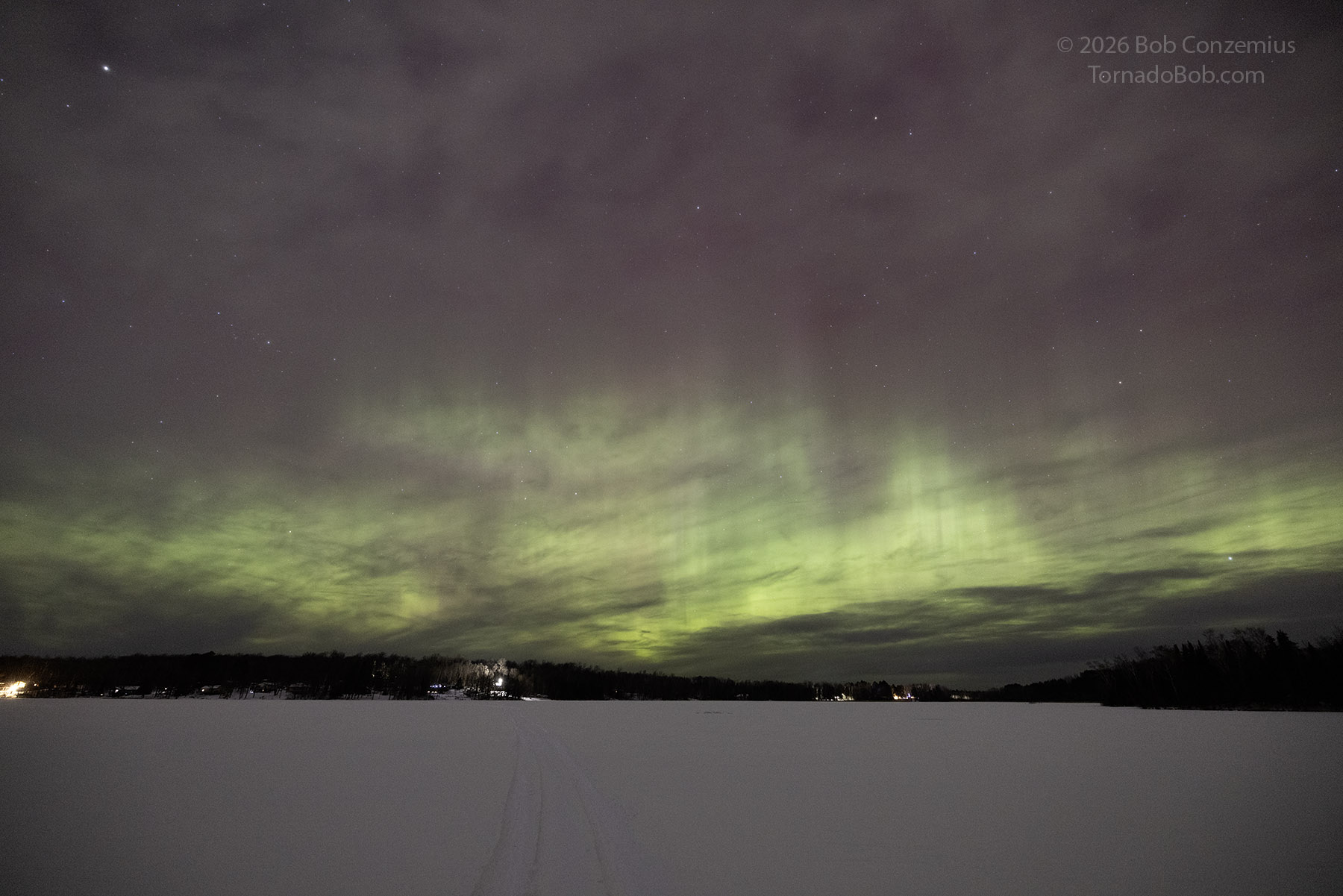
I ended up going out to shoot again later in the night. Solar wind conditions continued to look good, and although clouds were moving in, there was enough clearing to reveal the auroras. I drove out to Prairie Lake and watched as a new substorm developed near the horizon. This one was not as extensive or colorful, but it was bright, and I took pictures between midnight and 1:00 AM.
Wrap-up
This was an interesting night with a new form of auroras I don't think I've documented before. Maybe they were "dune" auroras. I'll have to go back and see what people were calling them.