The Setup
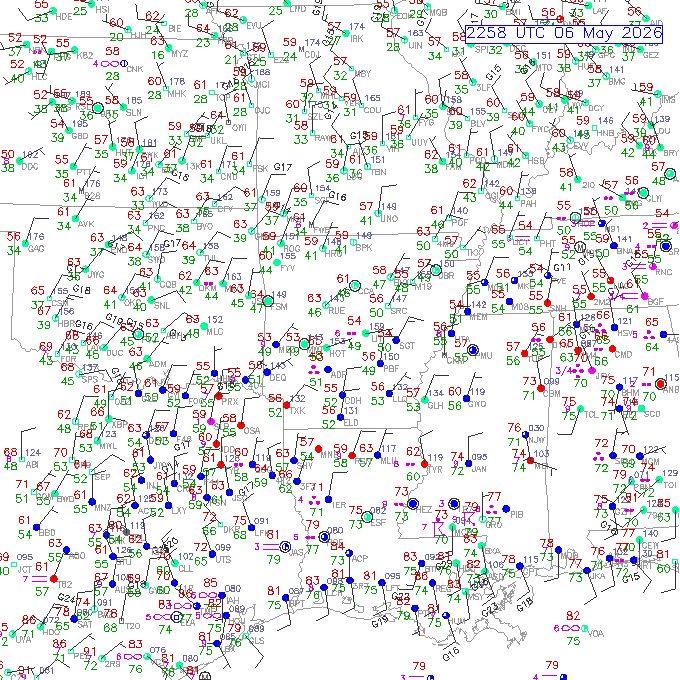
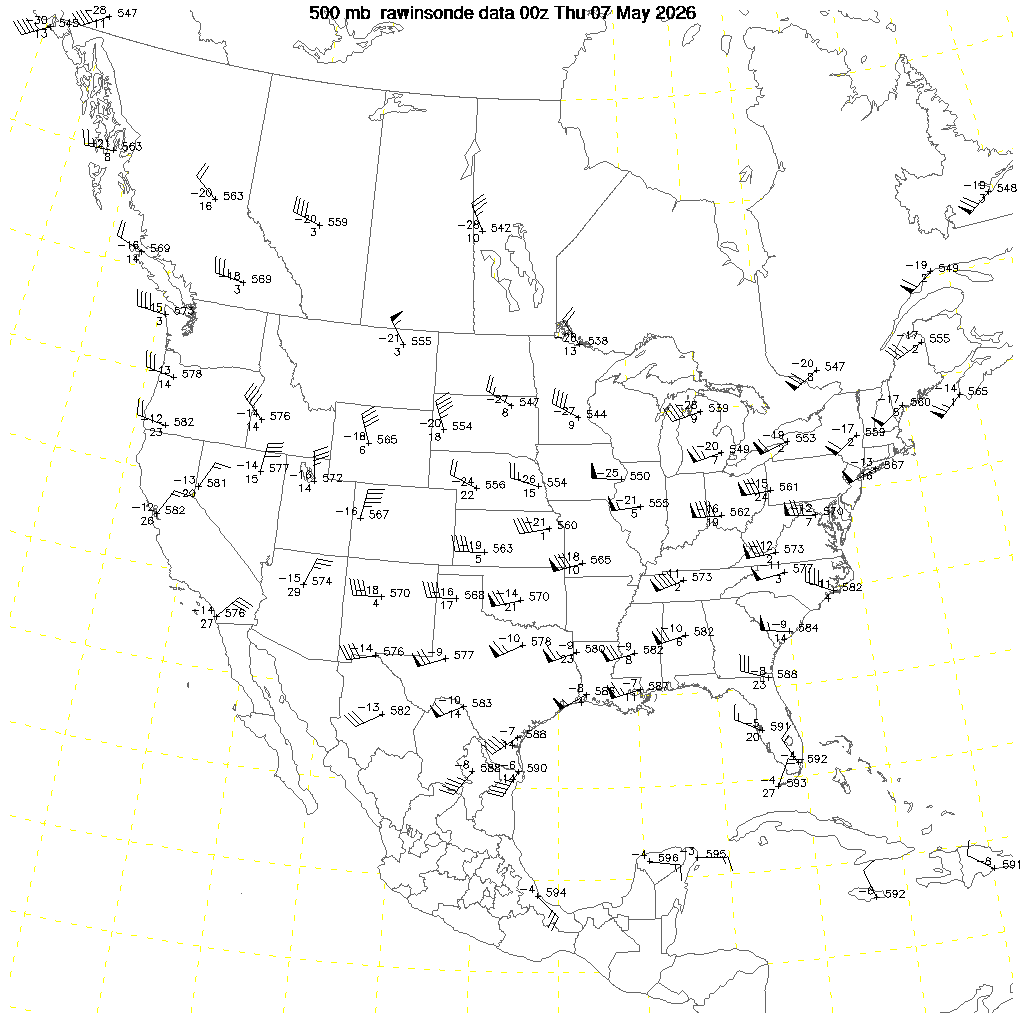
The Storm Prediction Center forecast an enhanced risk of severe storms in Louisiana and Mississippi with a 10% hatched area for tornadoe risk. A cold front was sagging southward and some lift in the warm sector just ahead of the front was forecast to generate storms from a warm humid airmass with 80/74 typical temperature/dewpoint. Shear was also strong with up to 70 knots of 0-6 km shear. 500 mb winds were up to 70 knots over the warm sector. The maps below show the near-surface and mid-tropospheric winds.
The Chase
After a somewhat lackluster chase the day before, we departed Conway, AR just after 9:00 AM and essentially skipped lunch in order to get far enough south to get in front of a storm. The morning runs of the HRRR showed the stationary frontal boundary or outflow boundary to be farther south than early runs. The earlier runs had put this boundary across northern Louisiana, but now it was predicted to be closer to the latitude of Natchez, Mississippi. On the way south, as he usually does on big days, Bill gave me a break from driving (I was driving the follow van) in order to look at the weather maps. Perusing the HRRR hourly images and looking at Google Maps showing the satellite background, I figured out the type of chase territory, over which the storms would be moving. In general, this part of the U.S. has a lot of forests, but along the Mississippi River floodplain, there is a 30 to 50 mile wide area of open fields. We could watch storms as they developed and strengthened in Louisiana, but as soon as they crossed into Mississippi, they would be over dense forests with very limited (if any) visibility. In order for us to SEE tornadoes, the storms would need to be producing them before they crossed into Mississippi.
As we drove southward in far eastern Louisiana, small storms appeared to our southwest and became more numerous. Some of these were north of the front in cooler air, but some were also developing in the warm sector. We payed closer attention to these storms. We drove south until we identified a strengthening warm sector storm near Alexandria, LA. To get in position for this storm, we took Louisiana Highway 15 south and then turned westward on 565 toward Monterey. We made a pit stop there and assessed our road options. Our best plan was to back off a bit, returning eastward on 565 to avoid being stuck west of Black River Lake and to allow north-south maneuverability. We picked a rural gravel road a couple miles east of the lake and set up to watch the storm approach.
The First Storm
We sat at this spot from 3:30 to 4:00 PM as the action area came into view. A long inflow tail and broad wall cloud appeared out of the dark haze to the west and then gradually became more defined. The storm was very electrically active, and when the action area was in the best proximity for photography, it unleashed the most intense CG barrage I've probably ever experienced. For several minutes, we had a continuous crashing sound of close CGs. Of course, I was the first to get in the van (my threshold is a one to two mile distance to the CG). Soon everybody else took cover. On my video, you can see exactly where some of these CGs were hitting in the fields around us.
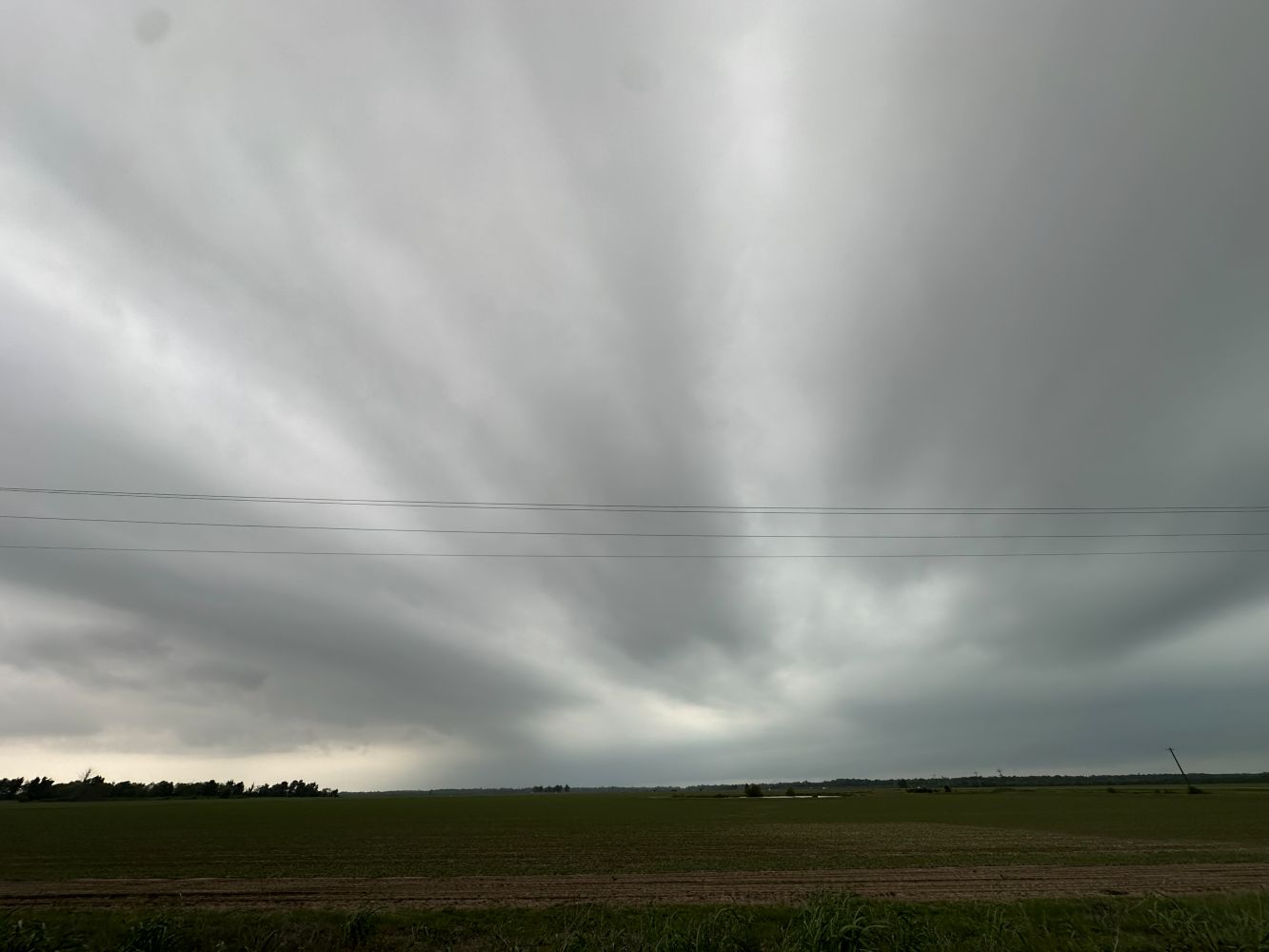
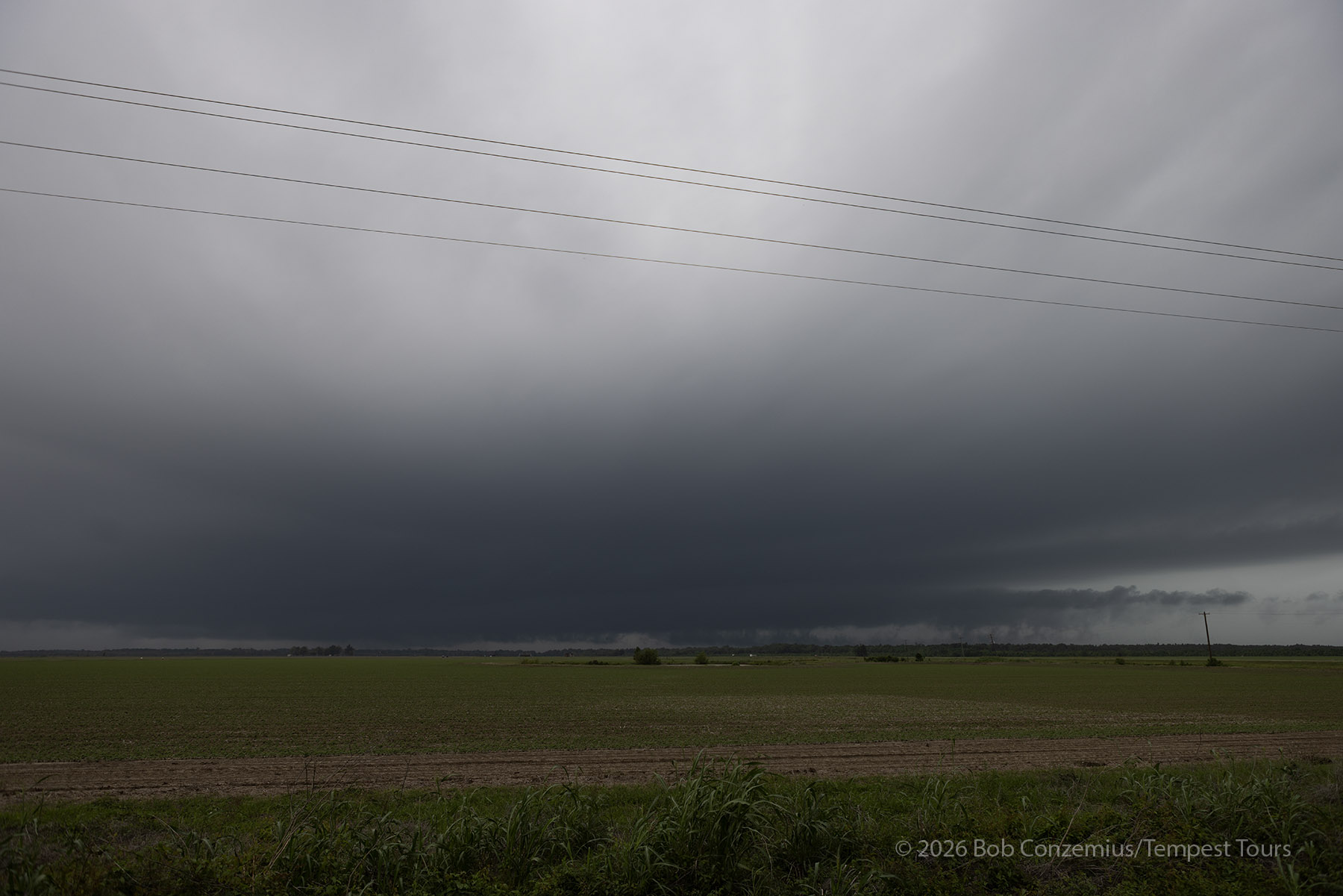
When the barrage was over, we drove back to Highway 15 and adjusted a bit northward to get the best visibility of the mesocylone. According to the reports, there was an EF0 tornado embedded in the rain-filled circulation from 4:03 to 4:06 PM CDT, exactly where I pointed my video. It was difficult or impossible to see. Our Guide on Tour 3B, Matt Phelps, was able to turn up the contrast on his pictures and identify a likely tornado. I have something suspicious and dark in my contrast-enhanced video, but I think it may have just been a gap in white-ish rain curtains (see my pictures and video below). We sat on Highway 15 along the dyke and let the center of the mesocyclone pass to our north as it crossed into Mississippi.
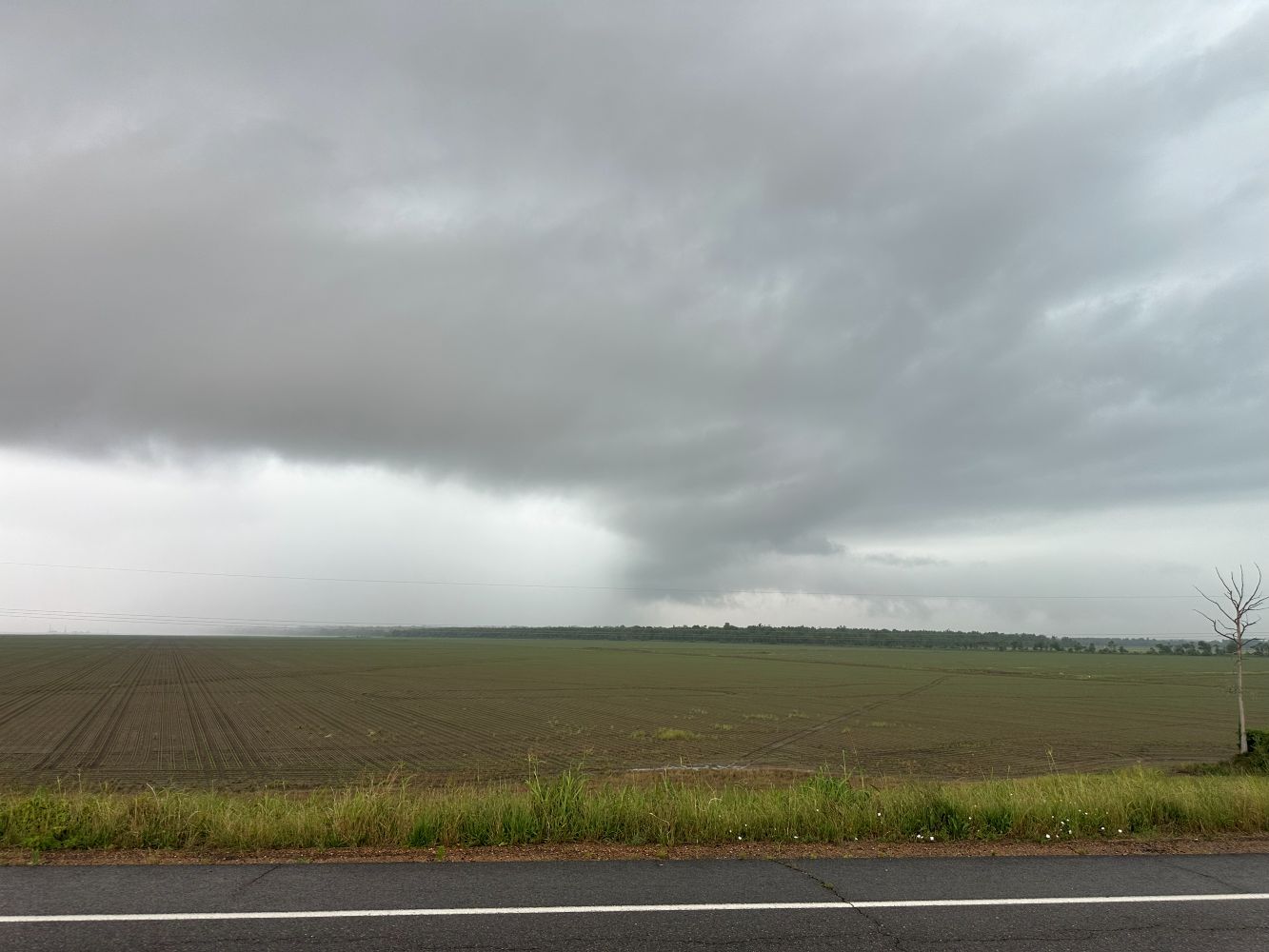
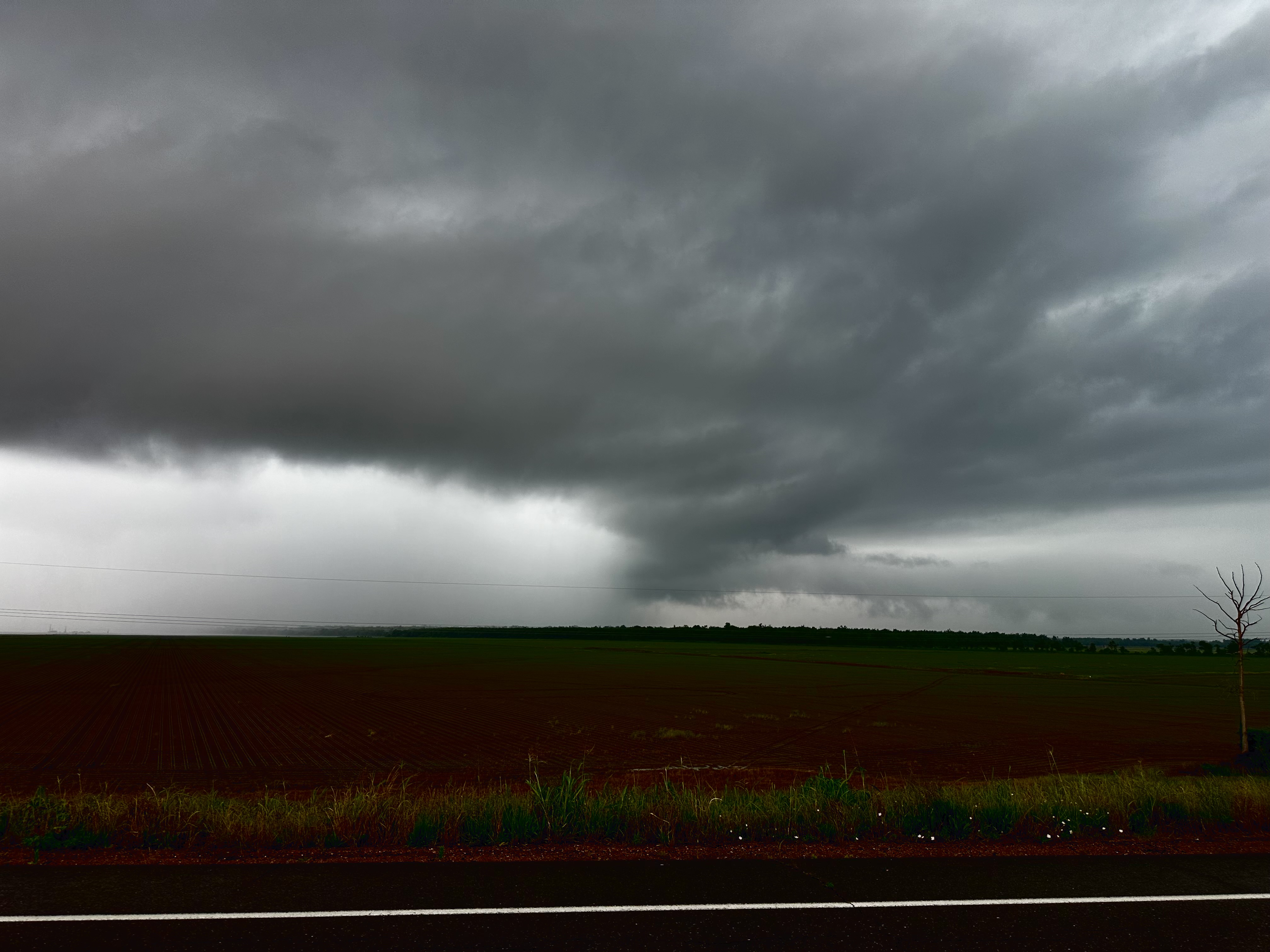
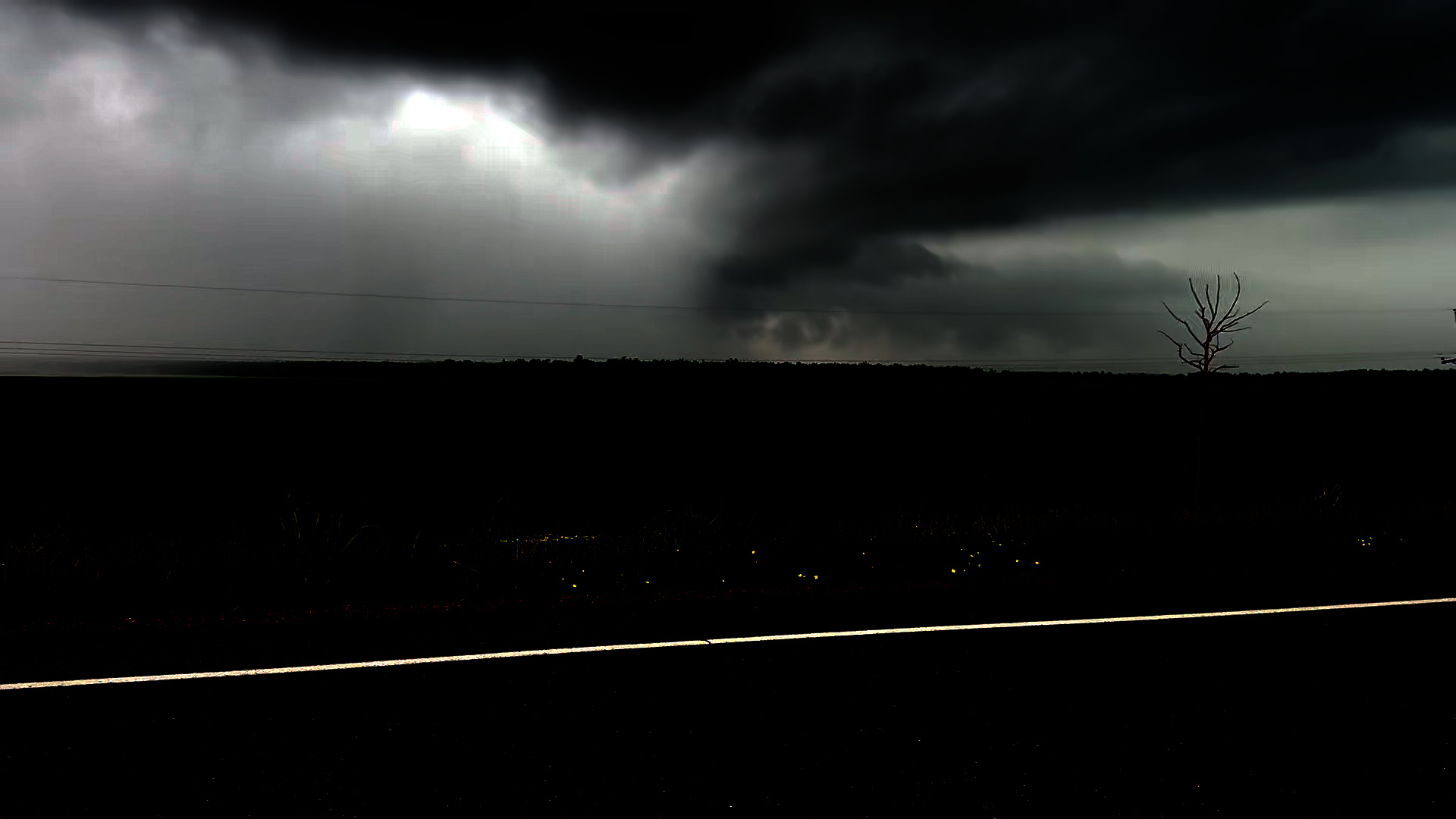
We did not want to chase this storm into the trees, but nonetheless, we crossed the river and drove around Natchez, Mississippi for a few minutes to add a new state to our list and kill some time before a new storm approached the Mississippi floodplain. Then, we drove back west to get the next storm.
The Second Storm
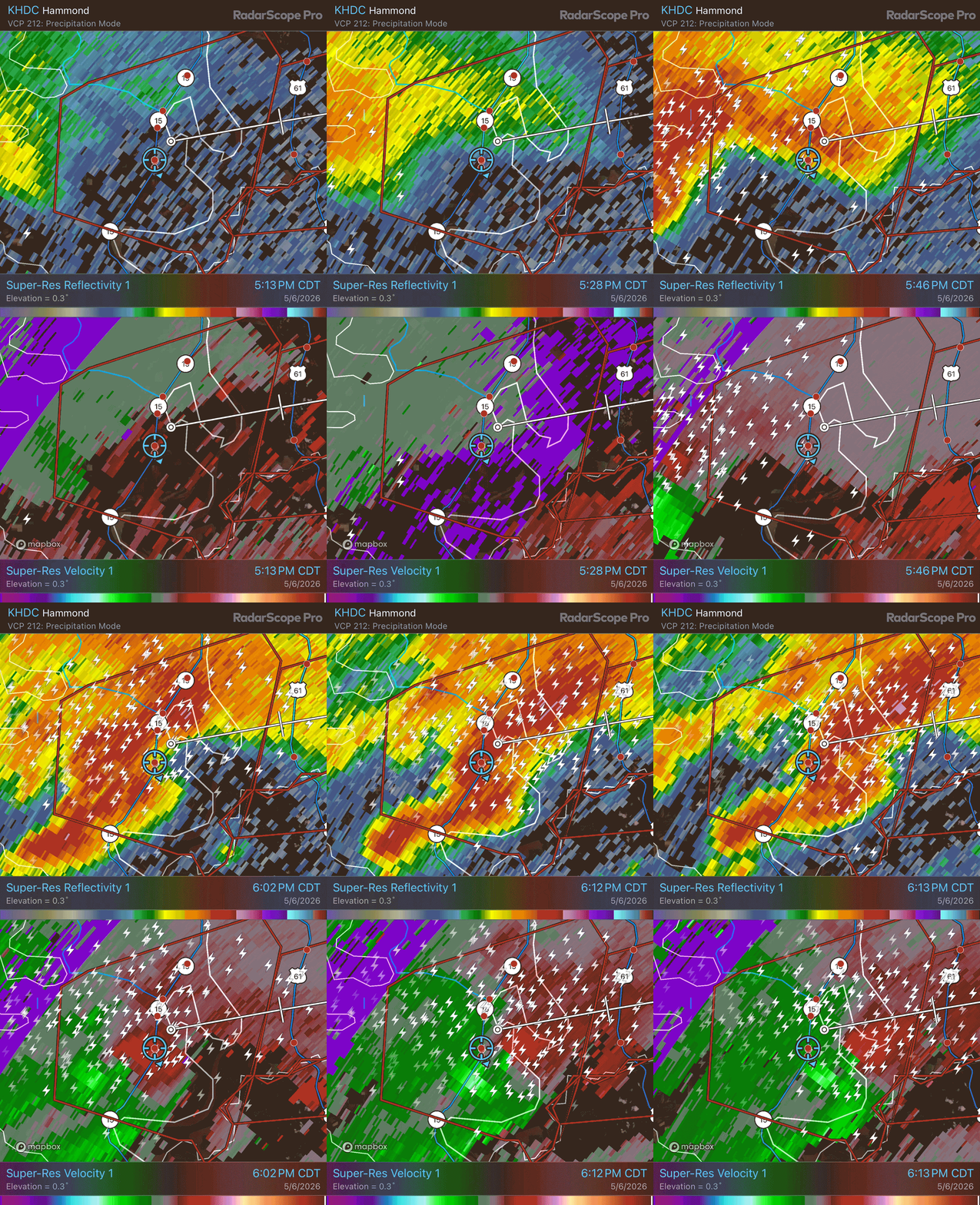
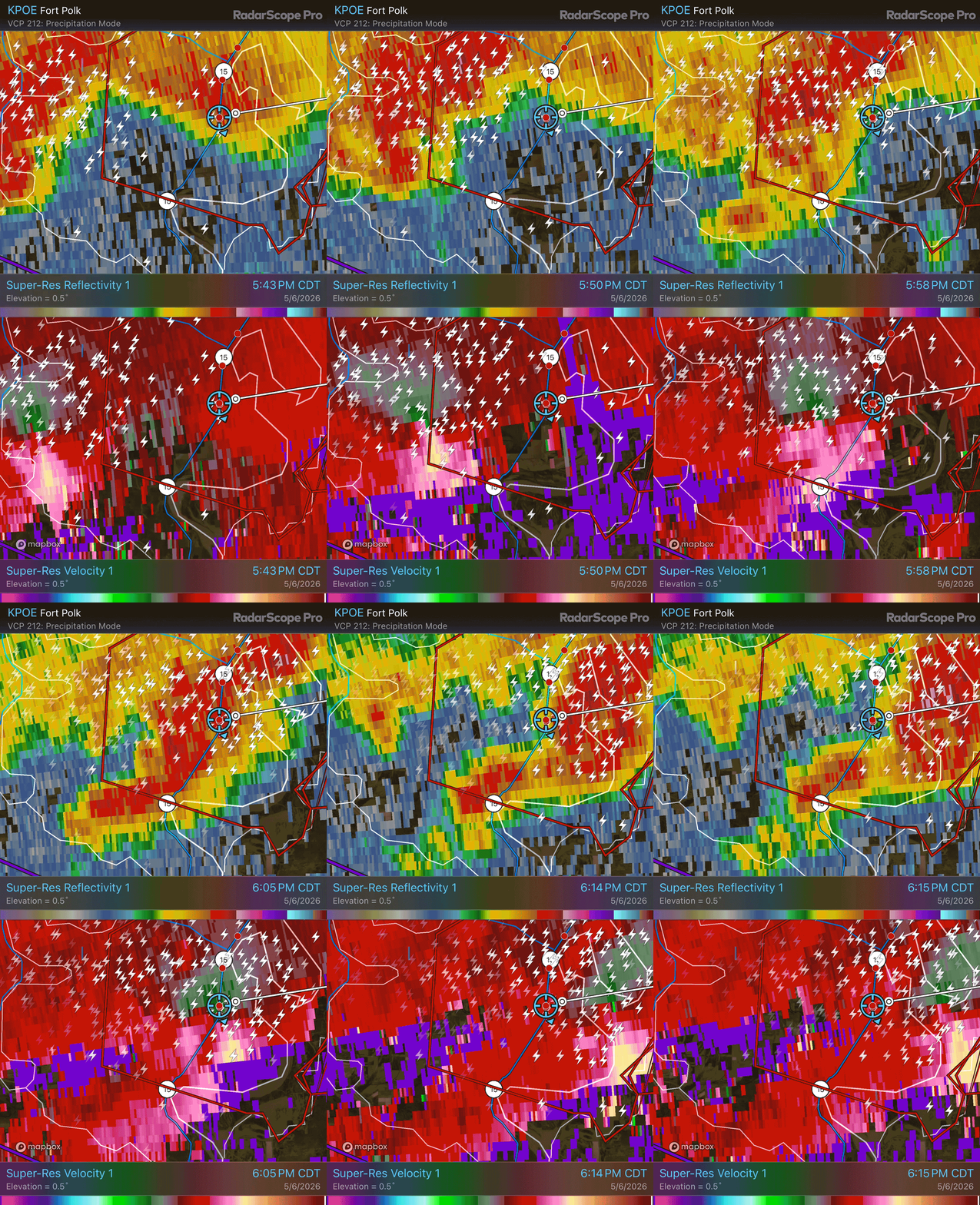
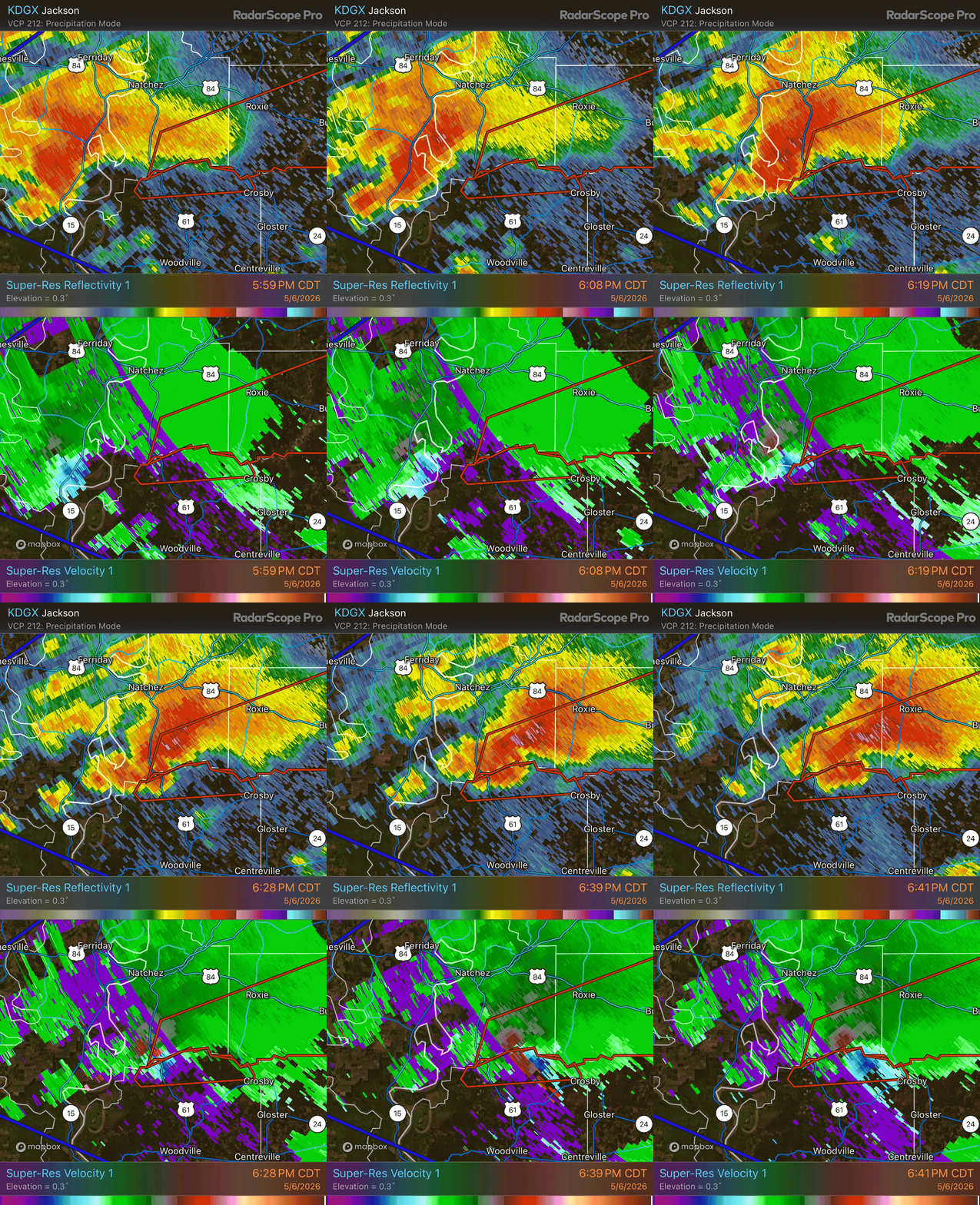
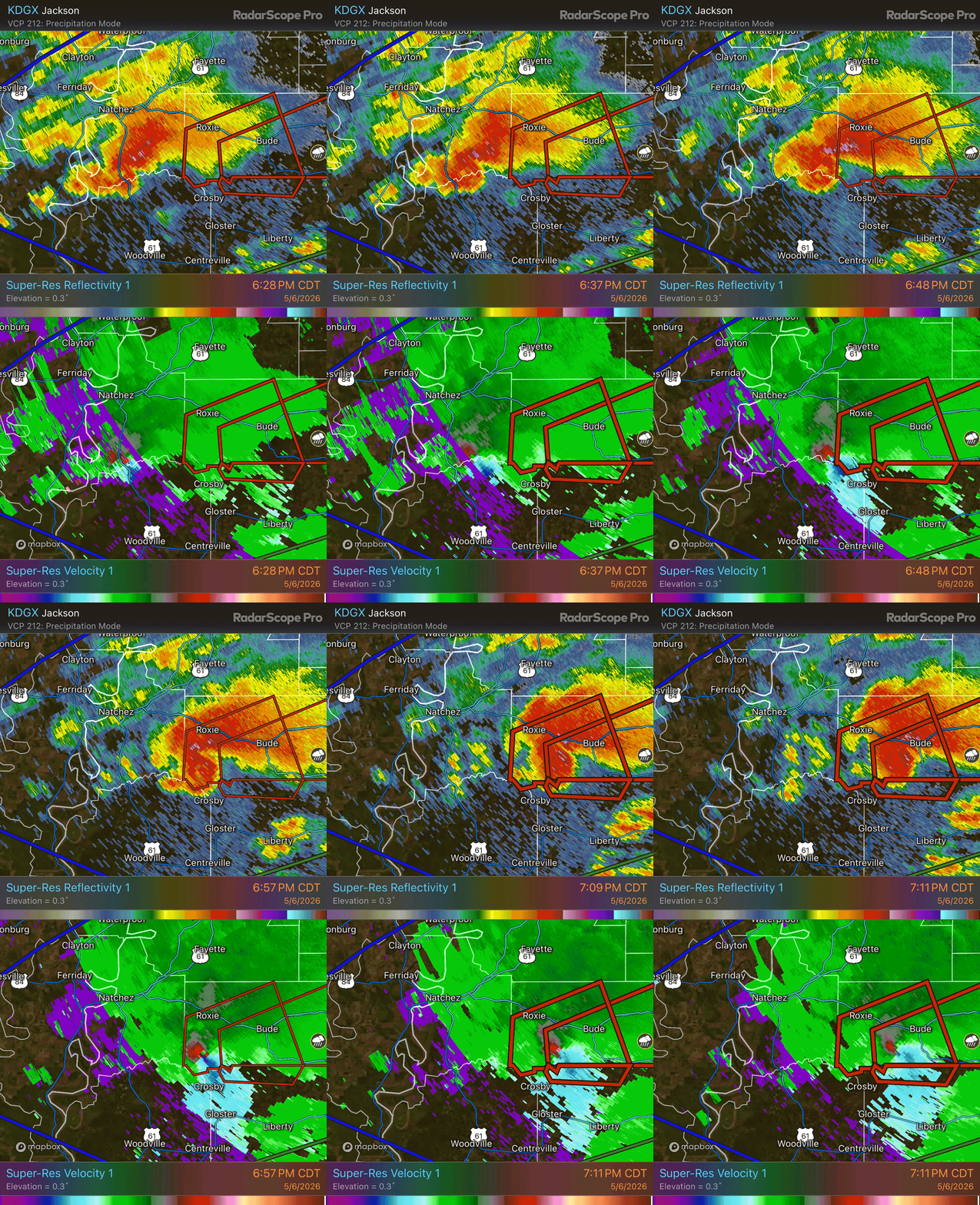
The next storm looked a bit stronger. That one had a pretty mean action area. It also had a CG barrage although not as intense as with the first storm. Since there appeared to be no tornadoes, we let the action area pass directly over us. There were a couple interesting areas of motion at the cloud base, but these smaller circulations did not organize or intensify. Apparently, as soon as our action area drifted east of us and became obscured by rain, it began to produce tornadoes. The first tornado damage was just a few miles to our east. The first tornado was an EF2, and then the storm produced a long track (50+ miles?) EF3 tornado. Some chasers followed the storm east into Mississippi or waited for it to cross the river. Only Reed Timmer caught any portion of it on video-- just one side of the condensation funnel for about five seconds.
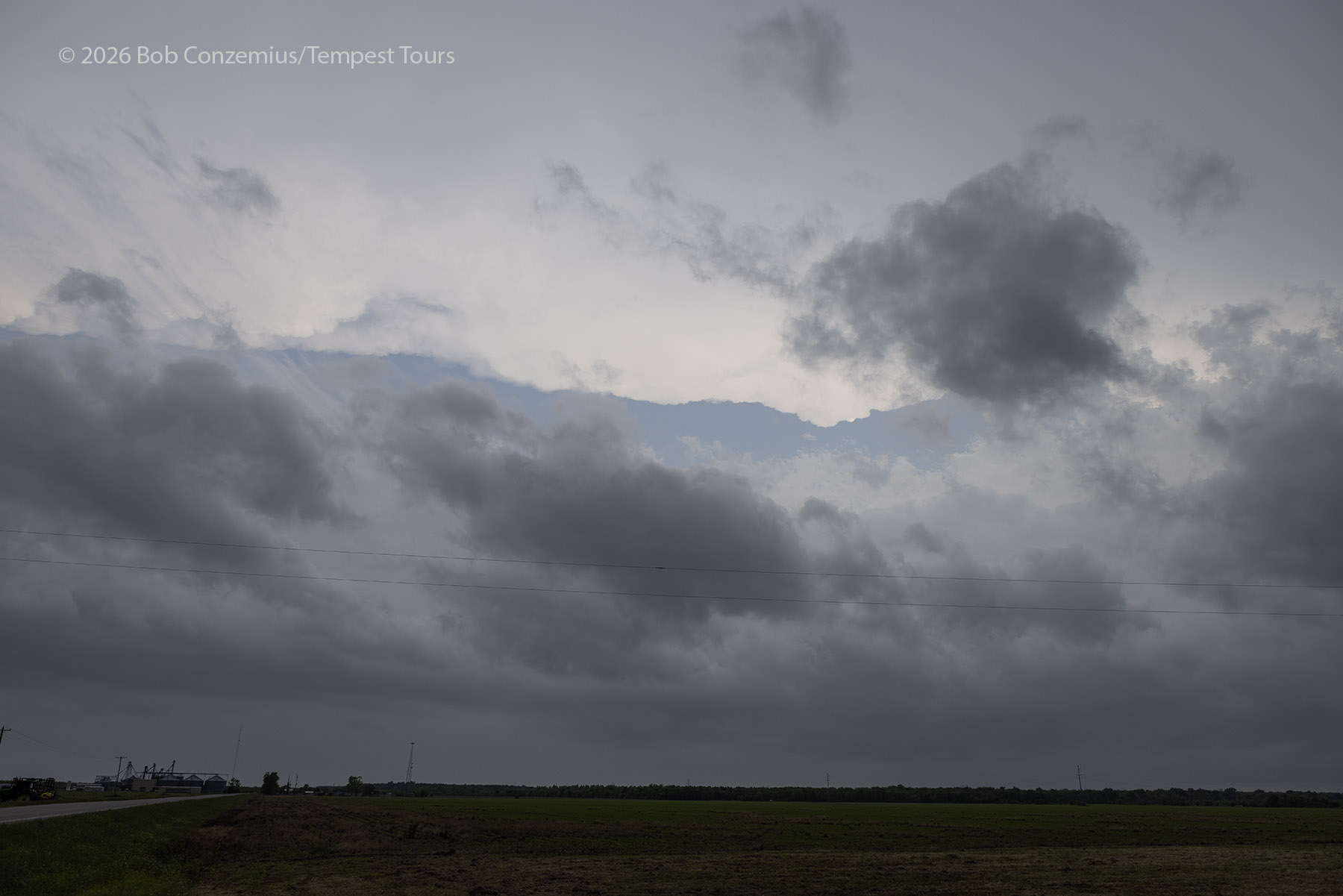
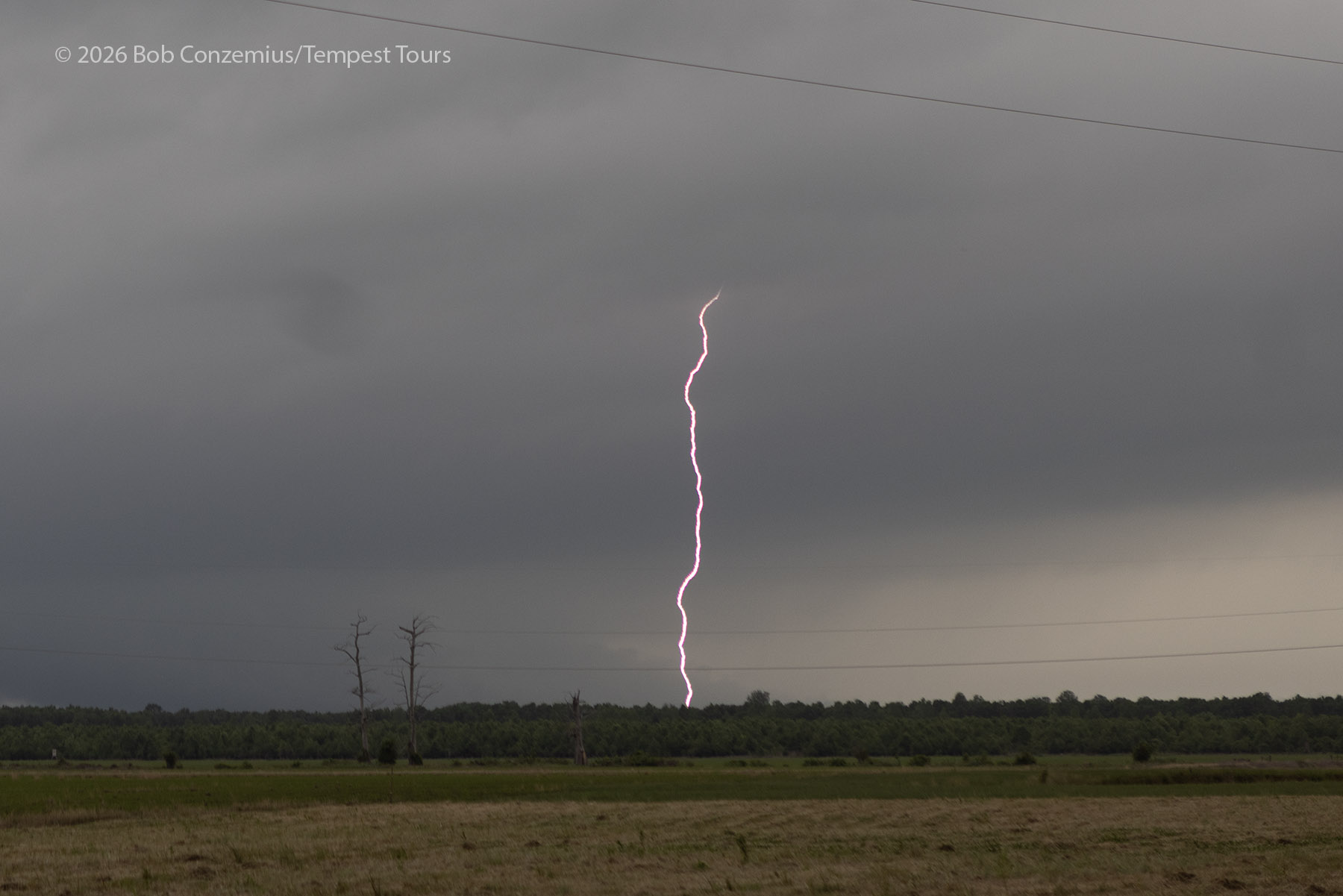
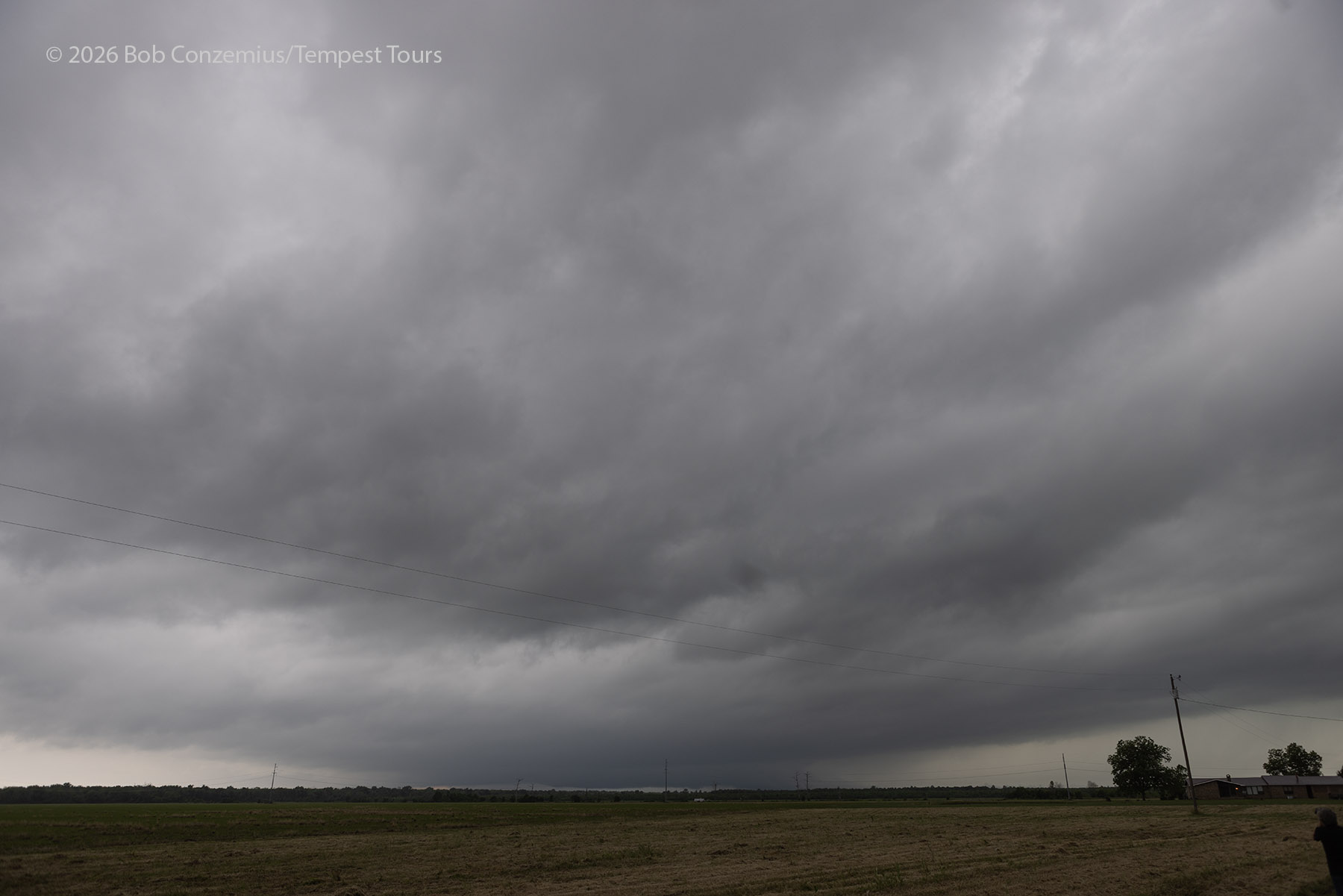
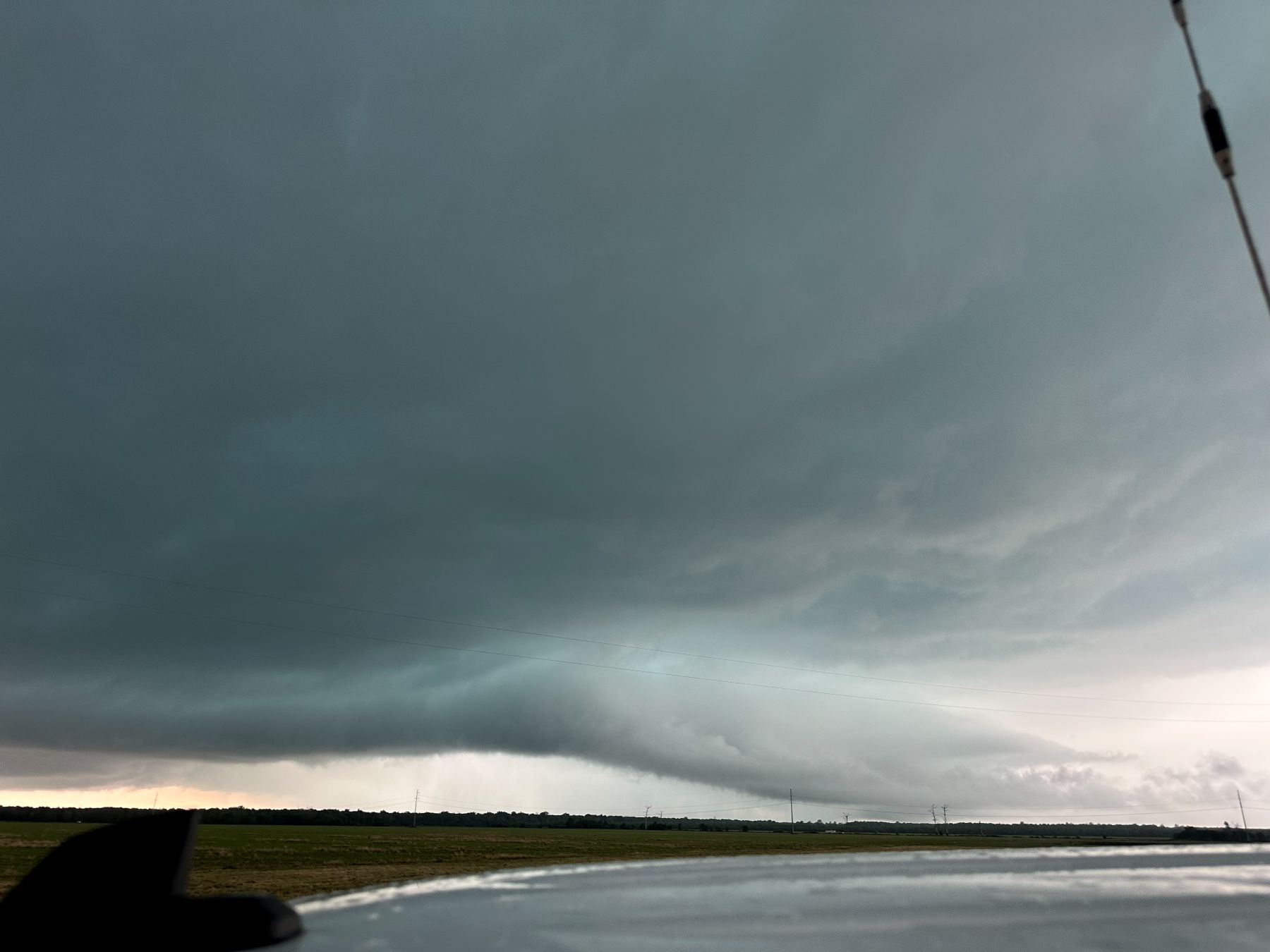
Our second storm crossed a little south of the track of the first storm. When the mesocyclone was mostly past us, we drove, through the trailing rain core, southward along the Mississippi River and looked at the back end of the storm, but it was no longer catchable. Back to our west, another storm was approaching Alexandria, LA. We began driving west to target that storm, but it was getting dark, and we chose to find a hotel there rather than chase any further.
Wrap-up
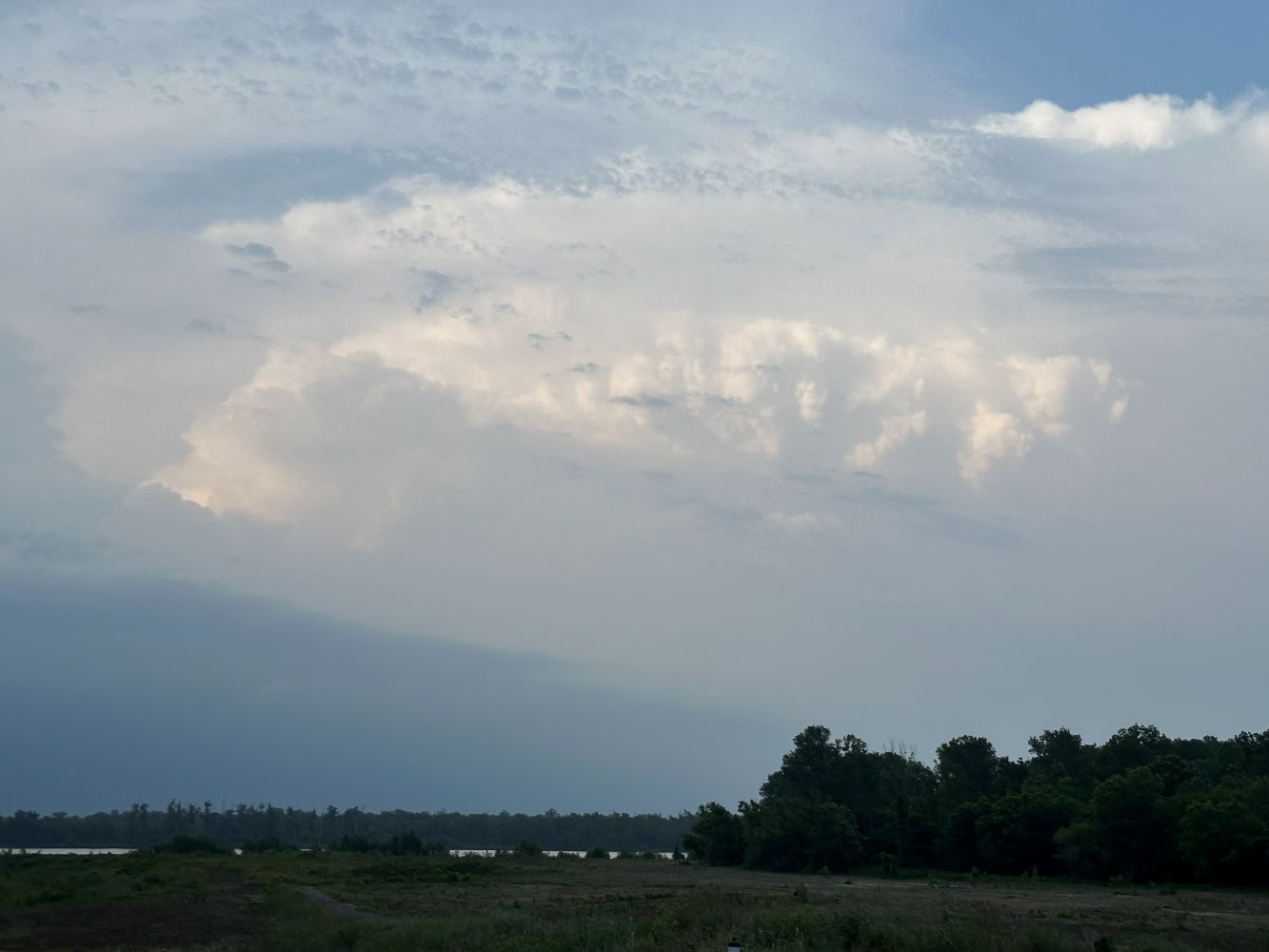
Overall, a great chase day! We had two supercells, both with tornado warnings, and one of them produced a tornado just two miles to our west. The second storm went on to produce long track tornadoes, which we did not see, but neither did anyone else, really. The barrages of cloud-to-ground lightning were the most memorable experience for our group today.
Radar Loops
Here are some radar loops I saved from this day. I originally saved them as *.mov files, but I later converted them to gif so they would display more easily. This caused some graininess in the gif files.